
Your Golfer's Body Has a Handicap Too — Here's How to Measure It
The Golf Fitness Handicap™ gives coaches a single, objective number that reveals how physically prepared a golfer is to support the swing they're trying to create — and holds them accountable between lessons.
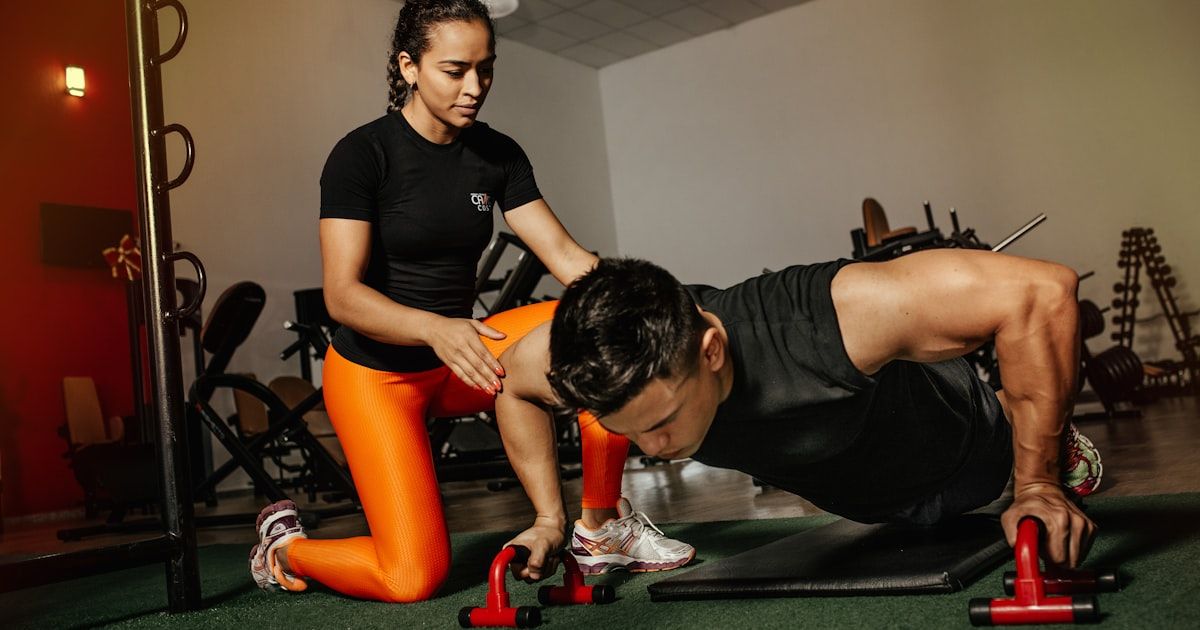
Every coach has seen it.
A golfer with a beautiful practice swing who falls apart under pressure. A player who "should" be hitting it farther based on their mechanics. A client who makes technical changes in a lesson but can't hold them for more than a few swings on the course.
You've probably chalked it up to mental game, commitment, or practice habits. And sometimes that's true. But more often than most coaches realize, the bottleneck isn't between the ears — it's in the body.
The question you should be asking before every technical change, every drill, every swing thought is this:
Can this golfer's body actually do what I'm asking it to do?
That's the question the DRVN Golf Fitness Handicap™ was built to answer.
What Is a Golf Fitness Handicap?
You already speak the language of handicaps. Your golfers do too. Everyone understands that a handicap reflects current ability, that it moves based on performance, and that lowering it requires consistent, verified improvement.
The Golf Fitness Handicap applies that same logic to the body.
It's a single number that reflects how physically prepared a golfer is to support the swing they're trying to create. It accounts for mobility, strength, power, athleticism, endurance, and speed — and it updates based on both formal assessment and daily training behavior.
Think of it this way: a golfer's playing handicap tells you what they're shooting. Their fitness handicap tells you what their body is allowing them to shoot.
When those two numbers are far apart, you've found the gap where coaching gets stuck.
Why This Matters for Your Coaching
If you're a golf instructor, you already know that two golfers with identical swing faults can need completely different fixes. One might need a technical cue. The other might physically lack the thoracic rotation to execute the position you're asking for.
Without a way to measure physical readiness, you're coaching blind in one eye.
The Golf Fitness Handicap gives you clarity on three things that directly affect your lesson plans and long-term player development:
Where the body is limiting the swing. If a golfer can't access the positions the swing demands — deep hip hinge, thoracic separation, stable single-leg balance — no amount of repetition will build a lasting change. The handicap shows you which physical domains are holding performance back.
When a golfer is ready for more complexity. A high fitness handicap means you should simplify. Focus on function before aggression. A lower fitness handicap means the body can tolerate more load, more speed, more precision. It earns you the right to push harder — and gives you the data to explain why.
How to keep golfers engaged between lessons. This is where most coaching relationships leak value. The golfer leaves the lesson motivated, doesn't do the work, comes back next week in the same place. The fitness handicap gives them a number that moves. If they train, it drops. If they skip, it rises. It makes the off-lesson work visible and accountable in a way that "do your stretches" never will.
How the System Works
The Golf Fitness Handicap is built on three connected layers. None of them work in isolation — together, they create a living score that reflects both what a golfer can do and whether they're doing the work to improve.
Layer 1: Standardized Physical Assessment
The foundation is a set of ten standardized tests — five mobility and five fitness — each scored on a 1-to-5 scale.
The Mobility Assessment maps directly to the golf swing. Five bodyweight movements, completable in under ten minutes, each tied to a specific swing demand:
- Air Squat → Posture
- Windmill Rotation → Thoracic Rotation
- Split Stance Rotation → Separation
- Glute Bridge → Activation
- Single Leg Hold → Balance, Stability & Proprioception
These aren't random screens. Each one tells you something specific about whether the golfer can organize their body through the positions the swing requires.
The Fitness Assessment evaluates the five physical qualities that underpin golf performance:
- Strength — can they hold positions and apply force?
- Power — can they generate speed?
- Athleticism — can they sequence movement efficiently?
- Endurance — can they repeat quality swings over 18 holes?
- Speed — can they raise their performance ceiling?
Together, the ten tests produce a combined score out of 50, with clear criteria adjusted for golfer type — male, female, junior, senior. This score forms the objective backbone of the handicap.
Layer 2: Training Cycles and Retesting
The system runs in six-week cycles: Assess → Train → Retest → Adjust.
This matters because it builds integrity into the process. A golfer doesn't just "feel better" — they prove it. Both mobility and fitness must be retested at the end of each cycle, under the same conditions, for any category advancement to be recognized.
Until retesting happens, the handicap category is locked. This prevents premature progression and protects the credibility of the number for both coach and athlete.
Layer 3: Daily Accountability Scoring
Between formal assessments, the handicap moves on a 72-hour rolling basis:
- No activity logged in 72 hours? The handicap goes up by one.
- Training or mobility work submitted? It drops by one.
This daily rhythm creates immediate feedback. It rewards consistency over intensity. And it gives golfers a reason to stay engaged every single day — not just during lesson weeks.
Daily scoring can shift the handicap within a category, but crossing into a new category still requires verified retesting. Momentum is encouraged without compromising accuracy.
The Handicap Categories
Assessment results map into five readiness categories:
Category
Handicap Range
What It Means
Category 5
30–25
Limited physical readiness — the body is significantly restricting what the swing can express
Category 4
24–18
Developing capacity — foundational work is the priority
Category 3
17–12
Solid foundation — the golfer has meaningful physical support for their game
Category 2
11–7
High readiness — the body can tolerate advanced training and aggressive swing work
Category 1
6–1
Professional readiness — physical capacity is a competitive advantage
Category 0
ELITE
Elite-level readiness — the physical ceiling of what's achievable in golf performance
Every golfer starts at a handicap of 36. That's intentional. It removes comparison pressure on day one, creates a common starting point, and lets golfers begin building momentum through participation before formal testing even begins.
Movement between categories is earned. Not assumed, not estimated — earned through retesting.
What This Changes in Practice
For coaches, the Golf Fitness Handicap becomes a decision-making lens you can apply to every player on your roster.
High handicap golfer walks in for a lesson? You know to prioritize function. Simplify positions. Don't chase distance or shot shaping yet — build the physical base that will make those changes stick when the time comes.
Lower handicap golfer? Now you can push. Increase complexity. Raise speed targets. Add training load. The body has earned the right, and the data supports the decision.
Golfer plateauing despite good technical work? Check the fitness handicap. If it's stagnant or rising, you've found your answer. The body isn't keeping pace with what the swing is demanding.
It also transforms how you communicate with your golfers. Instead of abstract conversations about "needing to get more flexible" or "building core strength," you can point to a number. You can show them where they are, where they need to be, and exactly what will move the needle.
That's not motivation. That's clarity. And clarity is what keeps golfers coming back.
The Bigger Picture
The DRVN Golf Fitness Handicap doesn't replace your coaching — it sharpens it.
It bridges the gap between physical preparation and golf performance in a language your golfers already speak. It gives you objective data to support your programming decisions. And it creates a system of accountability that extends far beyond the lesson tee.
When a golfer's fitness handicap is improving, their body is becoming more capable. Their swing changes stick. Their confidence grows. And your coaching gets the credit it deserves — because the results are visible, measurable, and directly tied to the work being done.
Progress becomes something you can both see. And when progress is visible, commitment follows.
Try It: The Golf Fitness Handicap Self-Assessment
Want to see where your golfers stand right now? The DRVN Golf Fitness Handicap assessment walks you through all ten test areas, gives you a scoring framework, and calculates a starting fitness handicap you can use to guide your next conversation.
It takes less than fifteen minutes. And it might change how you approach your next lesson.
Free Download
Get the Golf Fitness Handicap™
Assessment Worksheets
Two ready-to-use tools to measure your golfers' physical readiness — wherever they train. Enter your email and we'll send them straight to your inbox.
At-Home Mobility Worksheet
5-movement screen completable anywhere — no equipment needed. Scores posture, thoracic rotation, separation, activation, and balance.
In-Gym Fitness Worksheet
5 fitness tests — strength, power, athleticism, endurance, speed — with scoring criteria calibrated for male, female, junior, and senior golfers.
Related Articles
Golf Exercises for Seniors: A Joint-Friendly Routine (With Printable PDF)
A joint-friendly routine of golf exercises and stretches for seniors — eight moves, 15 minutes, no gym required. Includes a free printable PDF to track your reps.
Read
The Off Season Is Where Your Best Golf Is Built
The summer reveals what your body can do. The off season is when you change what that is. Inside the five-phase DRVN progression — Strength, Power, Speed, Biomechanics, Skill Transfer — and what it delivers for three very different golfers.
Read
Golf Posture: The Setup Fundamentals That Unlock Rotation
Correct golf posture isn't a checklist position — it's a product of hip hinge, thoracic extension, and core control. Here's how to build a setup that lasts 18 holes.
Read