
Should Golfers Train Differently? Yes, and We'll Show You How
Golf fitness is fitness — but that doesn't mean any program will work. Hewitt Tomlin explains why golf-specific training creates faster, more meaningful progress than generic gym work.
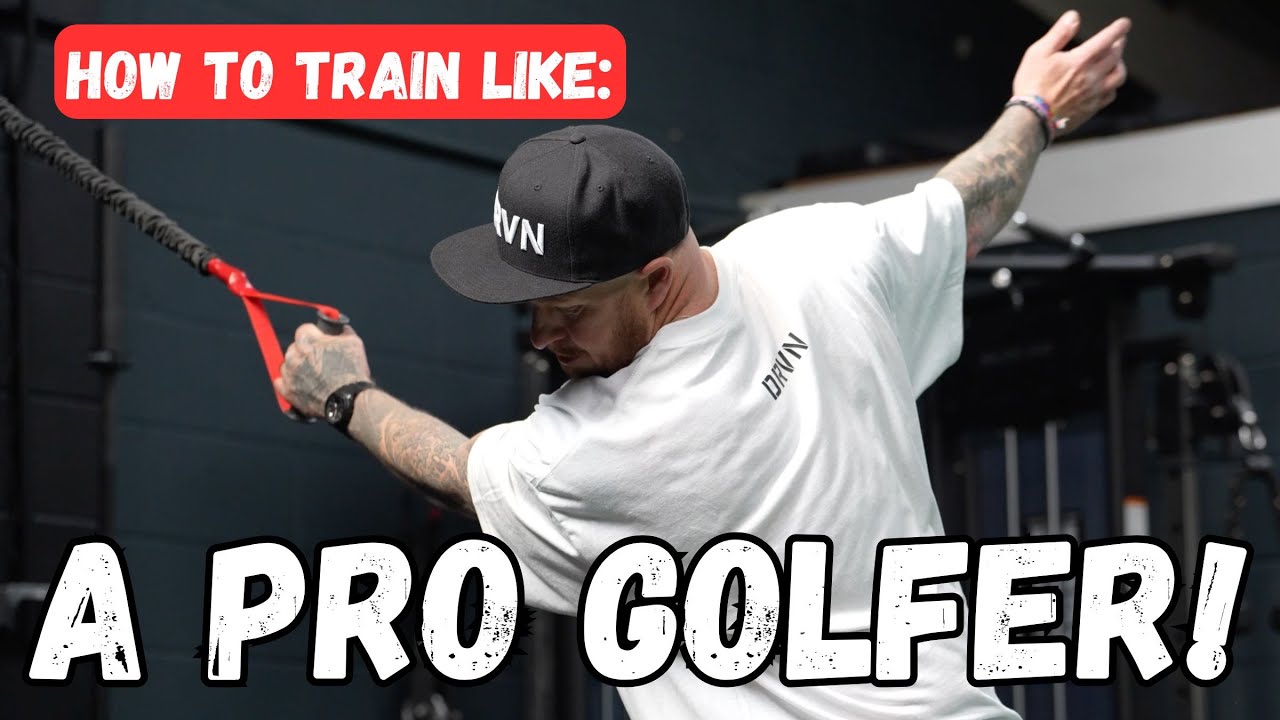
Golf fitness is fitness. To improve your game, you need strength, balance, mobility, and athleticism. But does that mean you can just follow any fitness program and expect meaningful progress? Not quite.
The kind of progress matters. Are you aiming for linear increases or isolated small wins? The answer lies in aligning your entire training plan with both physical development and skill-specific progressions.
Why Generic Fitness Programs Fall Short for Golfers
Many golfers jump into fitness programs that focus on general strength gains — increasing their bench press or squat numbers. While these improvements can help, they often lead to marginal gains if done in isolation. Increasing your bench press might boost upper body power, which can increase club head speed. But if you only focus on that, your overall golf performance will improve only slightly.
Golf is a complex sport that requires coordinated movement, timing, and stability. The golf swing involves dynamic effort, precise sequencing, and asymmetrical stability. Training must reflect these demands to create meaningful transfer from the gym to the course.
What Makes Golf-Specific Training Different?
Golf-specific training combines strength gains with dynamic movement patterns and stability work that mimic the golf swing. Here's what a focused golf fitness plan includes:
Dynamic Effort and Acceleration
Training explosive power and speed improves swing tempo and club head speed. This goes beyond lifting heavier weights — it's about training the ability to apply force quickly and repeatedly.
Golf Swing Sequencing
Exercises that promote proper timing and coordination between the lower body, core, and upper body enhance swing efficiency. The gym becomes a place to rehearse the sequencing patterns your swing depends on.
Asymmetrical Stability
Golfers need to stabilize their bodies during uneven weight shifts and rotational forces. Training this stability reduces injury risk and improves control — especially under fatigue at the end of a round.
Mobility and Balance
Maintaining a full range of motion and balance allows for a more fluid and powerful swing. Mobility isn't just a warm-up consideration — it's a training outcome that needs to be developed deliberately.
By combining these elements, golfers see faster and greater improvements than by focusing on isolated strength gains alone.
How We Designed Our Golf Fitness Programs
Recognizing the need for a tailored approach, we upgraded all DRVN golf fitness programs to set a new standard in golf training. Here's what makes our programs stand out:
- Handwritten and designed workouts. Every workout is carefully crafted down to the last rep. We don't rely on simple spreadsheet formulas that just increase volume week after week. Each session targets specific physical and skill goals.
- Golf Fitness Handicap™ tracking. A unique system to track progress clearly and accurately — showing exactly how much you're improving in areas that matter for golf performance.
- Clear and focused progressions. Programs guide you through logical steps that build strength, power, and skill in harmony.
- Flexible daily programs. Workouts are designed across a weekly structure, but you can manage your schedule as you prefer. Each day offers the same stimulus at different levels, so you can choose workouts based on your equipment and time.
- On-demand options. Need a warm-up, specific drills, or practice sessions? The DRVN App lets you select workouts by time, focus, and available equipment.
Building Pre-Season Momentum
Pre-season training in our programs focuses on power development — the foundation for peak performance when the season starts. You'll experience:
- Drop sets to push muscle endurance
- Dynamic effort exercises to train acceleration
- High-level rotational movements to mimic the golf swing
These elements combine to build momentum and prepare your body to perform when it counts.
Practical Tips for Golfers Starting a Fitness Program
- Don't just lift heavy. Strength is important, but it must be paired with speed, coordination, and stability work.
- Focus on movement quality. Proper technique in exercises translates to better swing mechanics.
- Track your progress. Use tools or apps that measure improvements in golf-specific fitness, not just weight lifted or reps done.
- Be consistent but flexible. Follow a structured plan, but adjust based on your schedule and equipment availability.
- Enjoy the process. Training should be engaging and rewarding. Celebrate small wins and stay motivated.
Why Golfers Should Embrace Specialized Training
Golfers who adopt a specialized training approach experience faster improvements, fewer injuries, and a more enjoyable fitness journey. Aligning your workouts with the demands of golf creates a clear path to better performance. For a deeper look at how this system works in practice, explore DRVN programming.
If you want to see real progress, your training must go beyond generic fitness. It needs to be golf-specific, well-designed, and adaptable to your needs.
Watch
Related Articles
Golf Exercises for Seniors: A Joint-Friendly Routine (With Printable PDF)
A joint-friendly routine of golf exercises and stretches for seniors — eight moves, 15 minutes, no gym required. Includes a free printable PDF to track your reps.
Read
The Off Season Is Where Your Best Golf Is Built
The summer reveals what your body can do. The off season is when you change what that is. Inside the five-phase DRVN progression — Strength, Power, Speed, Biomechanics, Skill Transfer — and what it delivers for three very different golfers.
Read
Golf Posture: The Setup Fundamentals That Unlock Rotation
Correct golf posture isn't a checklist position — it's a product of hip hinge, thoracic extension, and core control. Here's how to build a setup that lasts 18 holes.
Read