
Band-Resisted Impact Training: The Missing Piece in Most Golf Fitness Programs
Most golf training builds strength and mobility but never trains the moment that matters most — impact. Here's why band-resisted impact training is different, and how it works.
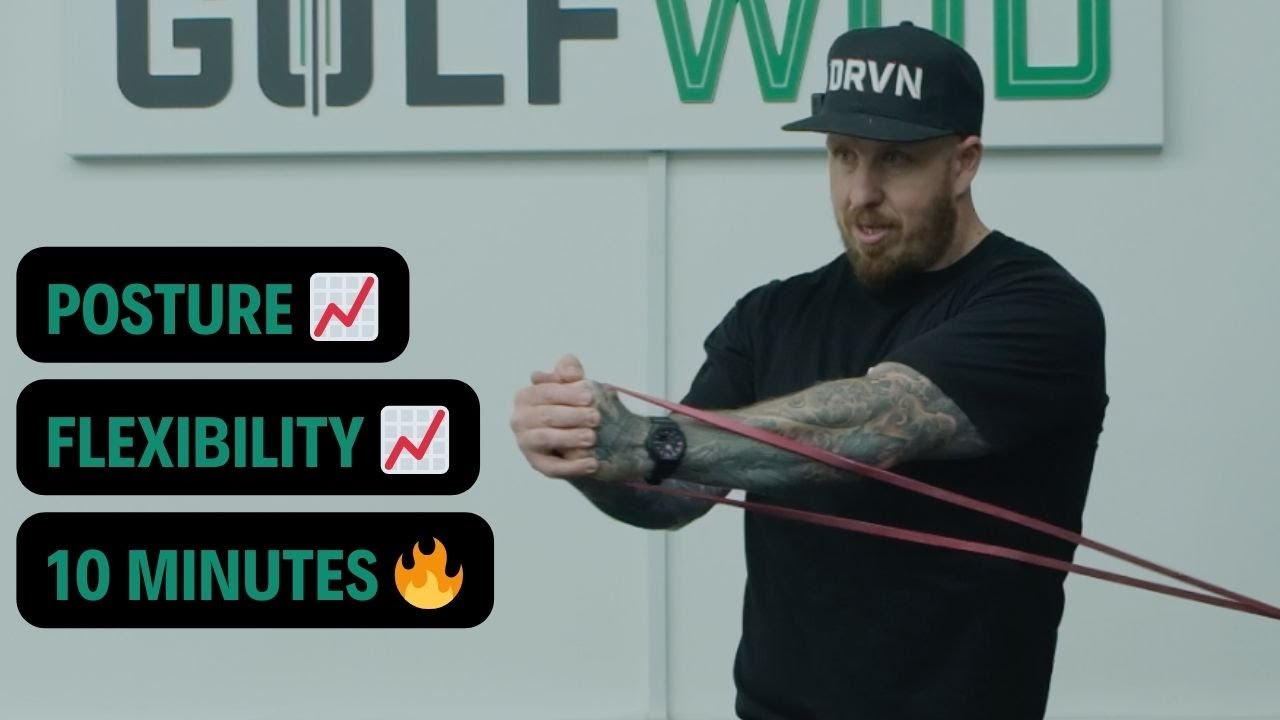
There's a gap in most golf fitness programs that almost nobody talks about. Golfers spend time building mobility, developing strength, and training rotational power — but very few ever train the moment the club actually meets the ball.
Impact is where everything is tested. Every rep in the gym, every mobility drill, every speed session — it all shows up or falls apart in a fraction of a second at contact. And yet most programs treat impact as something that just happens after training, rather than something worth training directly.
Band-resisted impact training addresses that gap directly.
What Happens at Impact (and Why It's Hard to Train)
At the moment of impact, the body's job isn't to create more movement — it's to release the force it's already built. That shift from building power to expressing it efficiently is what separates golfers who convert gym gains into distance from those who stay stuck at the same speed year after year.
To release force cleanly at impact, the body needs to:
- Maintain posture — not collapse or early-extend under high rotational forces
- Stay balanced — control the center of mass so the swing stays on plane through contact
- Drive through the ground — the lead leg presses into the ground to create a stable base for the release
- Unwind naturally — the torso rotates and extends without the golfer forcing or guiding it
The problem: most gym exercises don't load these patterns in a way that transfers to the actual impact position. Squats and deadlifts build posterior chain strength, but they don't teach the body how to stay organized while rotating and extending simultaneously under load.
How the Band Changes the Training Equation
When you anchor a resistance band under your lead foot and swing into an impact position, something important happens: the band forces your body to react rather than force the movement.
That distinction matters. Most golf swing problems — early extension, loss of posture, hanging back — happen because the body is muscling the swing rather than sequencing it. The band creates immediate feedback. If you collapse, the resistance exposes it. If you lose posture, you feel it. If you shift weight incorrectly, the band tells you before your brain does.
This makes band-resisted impact training one of the most honest training tools available. It doesn't just build strength — it teaches the body to apply that strength in the right pattern at the right moment.
What It Fixes in the Golf Swing
The two most common impact faults in recreational golfers are early extension (hips thrusting toward the ball through impact) and loss of posture (the spine angle changing before contact). Both reduce power and accuracy — and both show up immediately under band resistance.
Using the band during impact-pattern drills teaches the body to:
- Maintain spine angle through the strike zone instead of standing up
- Rotate the torso through impact rather than sliding laterally
- Reach and extend through the ball without collapsing the lead side
- Feel the difference between a controlled release and a forced one
Golfers who train this pattern consistently often describe the sensation as the swing "unwinding itself" — which is exactly what efficient impact feels like when the body is organized correctly.
How to Use Band-Resisted Impact Training
This type of training is best approached as a skill drill rather than a conditioning exercise. The goal isn't fatigue — it's patterning.
- Start light: Use minimal resistance so the focus stays on posture and sequencing, not fighting the band
- Move slowly at first: Slow swings into the impact position build awareness before speed is added
- Build gradually: Once the pattern is clean at slow speed, progressive resistance and speed can be added
- Use visual feedback: Recording swings during band training reveals posture and balance changes that are hard to feel in real time
- Keep sessions short: 10–15 quality reps per session beats 50 sloppy ones — this is neurological patterning work
Where This Fits in a Golf Fitness Program
Band-resisted impact work sits in the bridge between strength training and swing performance. It's not a substitute for building mobility or developing rotational strength — both are prerequisites. But once the physical foundation exists, this type of training is what connects gym capacity to on-course performance.
In the DRVN system, impact pattern training is introduced after the mobility and foundational strength phases, when the body is capable of expressing the patterns cleanly. Adding it too early — before the hip mobility and posterior chain strength are in place — limits what the golfer can actually feel and learn from it.
Done in the right sequence, band-resisted impact training is one of the fastest paths from "I'm getting stronger in the gym" to "I'm actually hitting it further." If your current program builds fitness but doesn't train the moment that fitness needs to show up, this is worth adding.
Watch
Related Articles
Golf Exercises for Seniors: A Joint-Friendly Routine (With Printable PDF)
A joint-friendly routine of golf exercises and stretches for seniors — eight moves, 15 minutes, no gym required. Includes a free printable PDF to track your reps.
Read
The Off Season Is Where Your Best Golf Is Built
The summer reveals what your body can do. The off season is when you change what that is. Inside the five-phase DRVN progression — Strength, Power, Speed, Biomechanics, Skill Transfer — and what it delivers for three very different golfers.
Read
Golf Posture: The Setup Fundamentals That Unlock Rotation
Correct golf posture isn't a checklist position — it's a product of hip hinge, thoracic extension, and core control. Here's how to build a setup that lasts 18 holes.
Read