
Strength Training for Golfers: What Actually Transfers to the Course
The right strength training for golfers builds power, protects against injury, and shows up in your swing. Here's what transfers — and what doesn't.
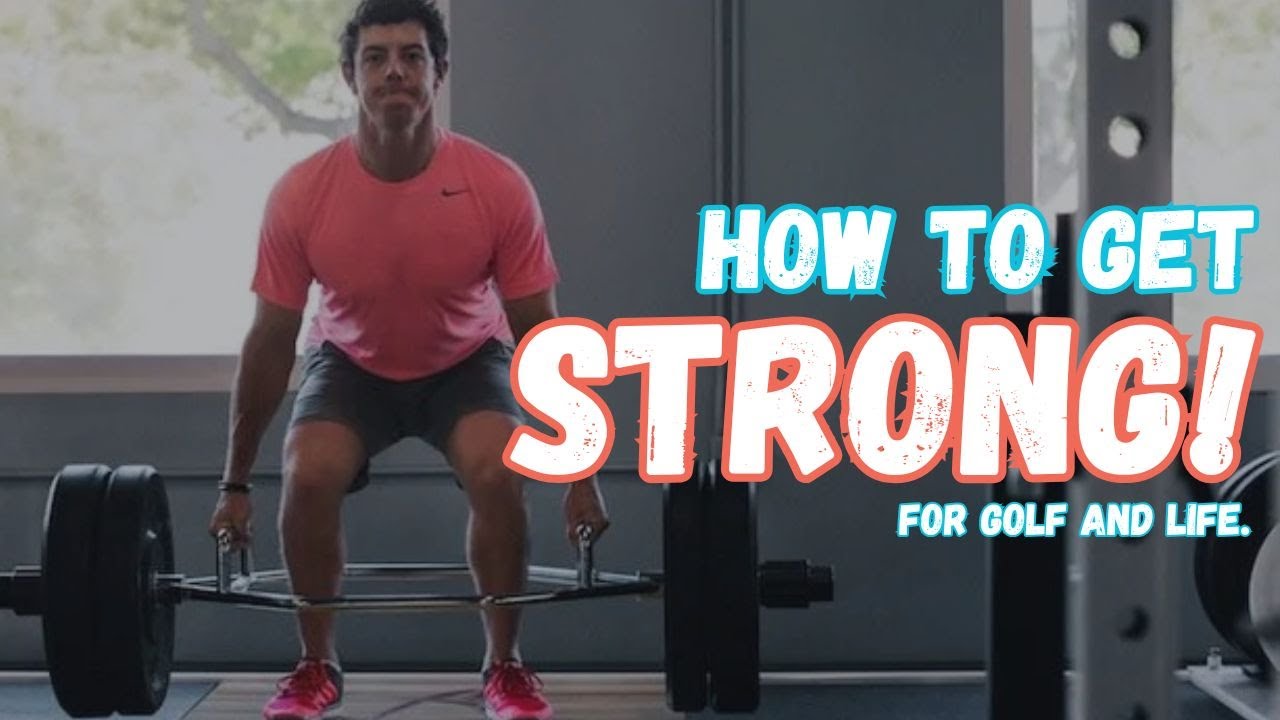
Strength training for golfers used to be treated as optional at best, counterproductive at worst. The old fear — that lifting would make you "too bulky" to swing fluidly — has been thoroughly disproven. Today, strength training is considered foundational to golf performance at every level.
The question isn't whether to do it. It's how to do it in a way that actually transfers to the course.
Why Strength Matters in Golf
Golf is a power sport. The ability to generate and transfer force through a coordinated kinematic sequence — ground up, through the hips, through the core, into the arms and club — determines how far you hit it and how consistently you repeat it.
Strength training builds the physical capacity for that sequence. Specifically:
- Hip and glute strength drives the ground force that initiates the downswing
- Rotational core strength transfers that force through the trunk to the upper body
- Shoulder and scapular stability keeps the club on path and protects against injury at high clubhead speeds
- Single-leg stability supports weight shift and maintains posture throughout the swing
Golfers who train these patterns consistently hit farther, feel more stable over the ball, and sustain their swing mechanics across 18 holes instead of deteriorating after the front nine.
The Most Common Mistakes
Most golfers who try strength training make one of three mistakes:
Training Without Assessment
Jumping into a strength program without knowing your mobility profile means you're loading patterns that may already be restricted. If hip mobility is limited, squats under load won't fix it — they'll reinforce the restriction and potentially create injury. Assessment comes first.
Prioritizing Intensity Over Consistency
Three hard workouts followed by three weeks off produces nothing. The training effect that transfers to golf is built through consistent loading over weeks and months, with progressive increases over time. A sustainable schedule beats an aggressive one every time.
Choosing Exercises That Don't Transfer
A chest press doesn't train the patterns a golf swing requires. Not because upper body strength doesn't matter — it does — but because the golf swing is a rotational, ground-up movement. Effective golf strength training prioritizes hip-dominant, rotational, and anti-rotation patterns over conventional bodybuilding movements.
What Actually Transfers
The most effective strength training exercises for golfers share a few characteristics: they involve the hip hinge, they require lateral and rotational stability, and they develop the ability to decelerate as well as accelerate. Key patterns include:
- Hip hinge (deadlift, Romanian deadlift): Builds the posterior chain strength that drives ground force and protects the lower back — the most commonly injured area in recreational golfers
- Single-leg work (split squats, lunges, step-ups): Develops the lateral stability and hip strength needed for effective weight shift
- Rotational core (Pallof press, cable rotations, anti-rotation holds): Trains the ability to generate and resist rotation — both are essential in the golf swing
- Hip mobility under load: Strengthening the hip through its full range develops the active mobility that shows up in the backswing
How to Structure a Golf Strength Program
The most effective golf strength programs are periodized — meaning the training shifts focus across the year based on the competitive calendar.
Off-season is the time to build the base: higher volume, lower intensity, focused on developing strength capacity. Pre-season shifts toward power development — lower volume, higher intensity, more explosive work. In-season reduces volume significantly to maintain fitness without adding fatigue before competition.
This structure matters because each phase prepares you for the next. Skipping the base-building phase and going straight to power work is like trying to build the top floor of a building without a foundation.
Connecting Gym Work to Course Performance
The challenge with strength training for golf is connecting gym output to course performance. More weight on the bar doesn't automatically mean more yards on the driver.
The Golf Fitness Handicap™ closes this gap. By reassessing physical capacity every six weeks using a standardized 50-point protocol, it provides an objective measure of whether training is building the right kind of fitness — the kind that supports swing mechanics, not just raw strength numbers.
If the score improves, the training is working. If it doesn't, the program adjusts. That feedback loop is what separates a structured golf fitness system from guesswork.
Getting Started
If you're new to strength training for golf, start with a physical assessment to establish your baseline. Identify the mobility restrictions and strength gaps that are actually limiting your swing — then build a program that addresses them systematically.
The goal isn't to become a powerlifter. It's to build a body that can generate more speed, sustain better mechanics, and hold up for every round — this season and the next 20 after it.
Watch
Related Articles
How To Hit It Further — Add 5 MPH Of Swing Speed, Gain 15 Yards
Every 1 mph of clubhead speed is worth 2.5 yards of carry. Here is what produces it — smash factor, the five-link kinetic chain, and the golf swing speed training that builds both.
Read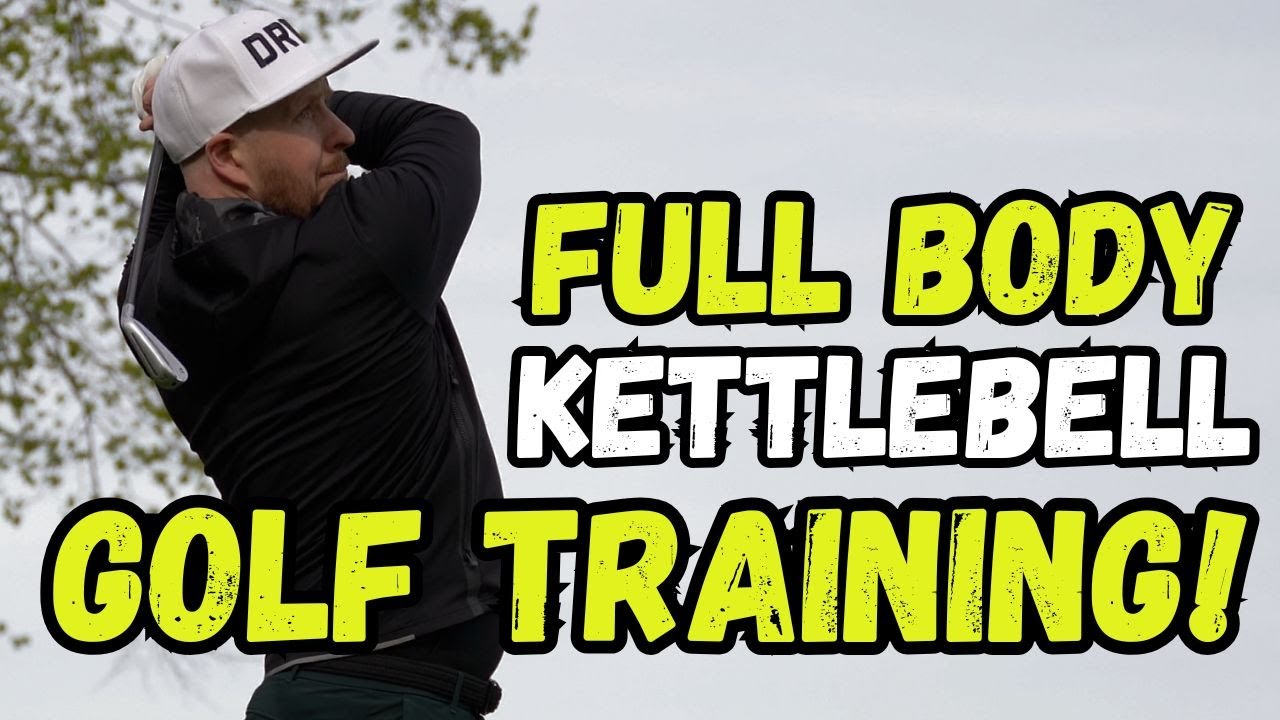
5 Best Kettlebell Exercises for Golf Fitness
Kettlebells are one of the most effective tools for golf-specific training — they build rotational strength, hip power, and grip endurance in the same movements your swing demands.
Read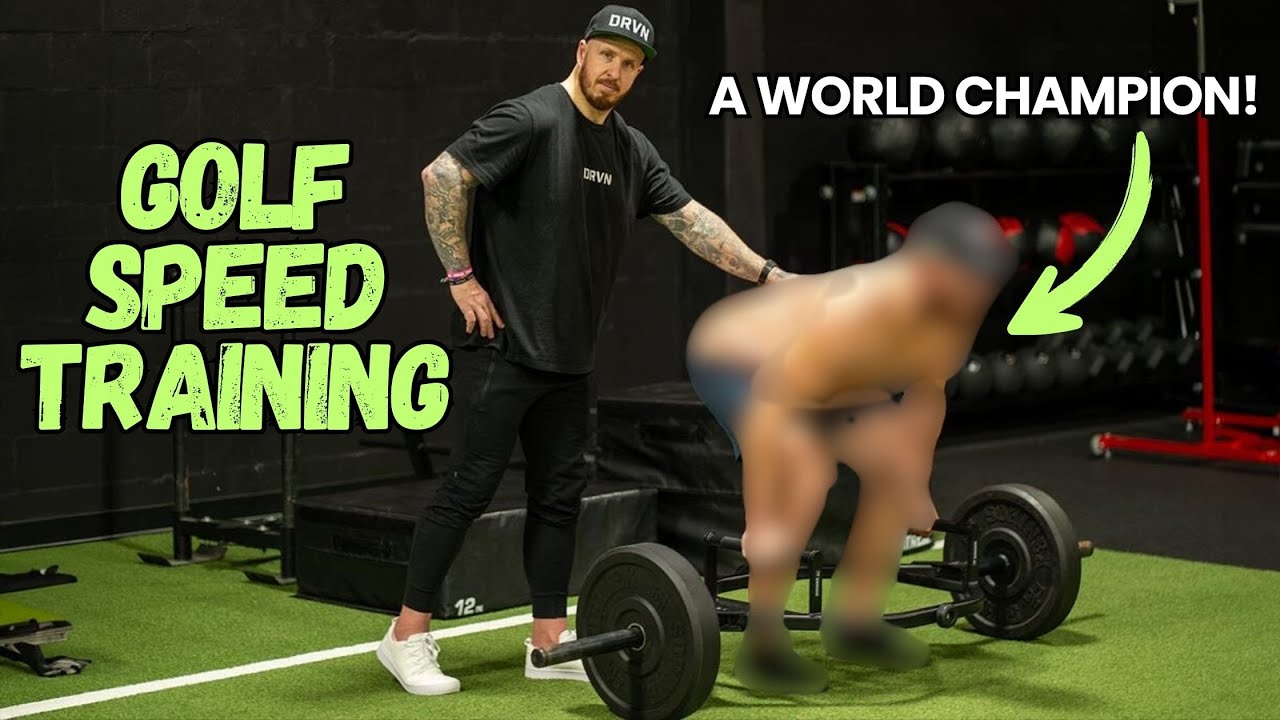
How to Add Distance to Your Golf Drives: The Strength and Speed Training Guide
More distance isn't about swinging harder — it's about training the right physical qualities. Here's what actually increases club head speed and how to build a program around it.
Read