
How to Add Distance to Your Golf Drives: The Strength and Speed Training Guide
More distance isn't about swinging harder — it's about training the right physical qualities. Here's what actually increases club head speed and how to build a program around it.
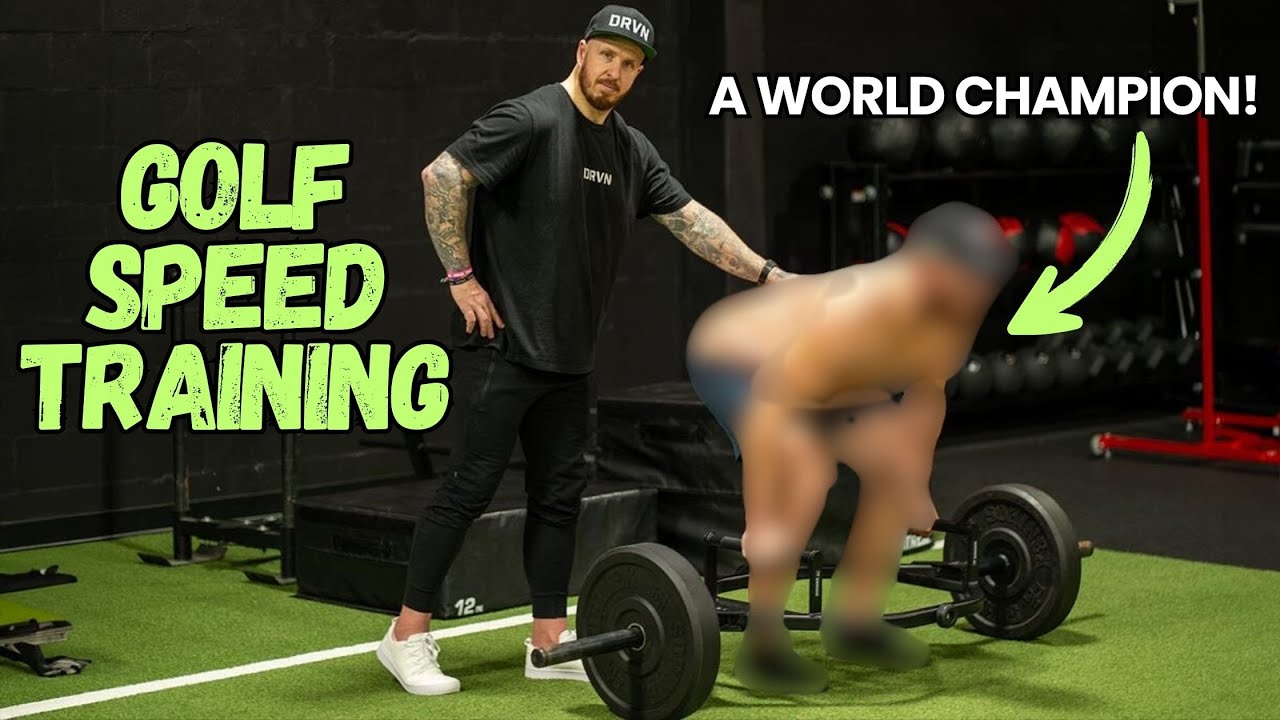
Every golfer wants more distance. More distance off the tee means shorter approaches, easier scoring positions, and an edge over players with similar ball-striking ability. But the pursuit of distance is also one of the most misunderstood areas of golf fitness.
The most common mistake: confusing effort with speed. Swinging harder isn't the same as swinging faster — and "swinging harder" typically makes the problem worse by introducing tension, poor sequencing, and loss of control. The golfers who gain meaningful, lasting distance gains do it through deliberate physical training, not by trying harder on the range.
What Actually Produces Club Head Speed
Club head speed is the product of several physical qualities working together:
- Rotational power: The ability to generate and transfer force efficiently through the kinetic chain — ground, hips, torso, arms, club.
- Hip mobility: Full hip rotation in both the backswing and downswing allows for maximum coil and uncoil. Restricted hips are one of the most common limiters of club head speed.
- Explosive strength: The rate at which you can develop force — not just how strong you are, but how fast your muscles can contract.
- Lead side stability: A firm, stable lead side gives the rotational chain something to rotate against. Weak lead-side stability bleeds power at impact.
- Thoracic mobility: The upper spine needs to rotate freely. Poor thoracic rotation restricts the backswing turn and forces the arms to compensate.
A training program for distance needs to develop all of these — not just chase heavier lifts.
The Training Principles That Drive Distance Gains
Dynamic Effort Work
Dynamic effort training means moving submaximal loads as fast as possible. Rather than grinding through heavy squats, dynamic effort work trains your nervous system to fire muscles quickly and in the right sequence. This has direct transfer to club head speed because golf is a speed sport — the swing happens in roughly 200 milliseconds.
Medicine ball rotational throws, band-resisted hip turns, and kettlebell swings are all examples of dynamic effort training that translates directly to the golf swing.
Hip and Thoracic Mobility
Before you can train power, you need the range of motion to express it. A golfer with a restricted thoracic spine will never achieve a full shoulder turn regardless of how much they train. Hip capsule tightness will limit the backswing hip turn and reduce ground force application on the downswing.
Targeted mobility work — hip 90/90s, thoracic rotation drills, and rotational stretching — should be a consistent part of every training week, not just a warm-up afterthought.
Rotational Strength and Core Stability
The core is the central link in the kinetic chain. A strong, stable core allows force generated by the lower body to be transferred efficiently to the upper body without energy leaking in the middle. Anti-rotation exercises (like Pallof presses) and rotational strength work (like cable chops) develop this capacity directly.
Lower Body Power
Ground force application is where distance starts. Research on elite golfers consistently shows that the downswing begins with the lower body pushing against the ground — generating the rotational force that travels up through the kinetic chain. Trap bar deadlifts, single-leg exercises, and jump training all develop the lower body power that feeds club head speed.
What a Distance Training Block Looks Like
A focused distance training phase typically runs 6–8 weeks, with 3–4 training sessions per week. A well-designed block will progress through:
- Weeks 1–2: Mobility assessment and correction, foundational movement quality work
- Weeks 3–4: Strength development — building the base of force production
- Weeks 5–6: Dynamic effort and power development — training rate of force development
- Weeks 7–8: Speed-specific work — rotational med ball throws, overspeed training, integration
The key is that each phase builds on the last. Jumping straight to speed work without a mobility and strength foundation produces marginal gains and increased injury risk.
Common Mistakes That Limit Distance Gains
- Only training bilaterally: Golf is asymmetrical. Training single-leg stability and rotational asymmetries matters.
- Ignoring mobility: Strength without mobility is locked power. You can't use what you can't access.
- No periodization: Random workouts produce random results. A structured progression is the difference between marginal gains and real distance improvement.
- Neglecting the lower body: Many golfers focus on core and upper body. The lower body generates the force. It needs to be trained with the same priority.
Measuring Your Progress
Distance gains in the gym need to be tracked on the course. Launch monitor data (club head speed, ball speed, smash factor) gives you objective feedback on whether your training is transferring. Pair gym-based strength assessments with regular swing speed measurements to see the relationship between physical development and on-course performance.
The Golf Fitness Handicap™ provides a structured framework for this — assessing the physical qualities that support distance and tracking them in six-week cycles so your progress is quantified, not just felt.
More distance is trainable. It takes the right program, the right progressions, and the patience to build the physical foundation before demanding the speed results.
Watch
Related Articles
How To Hit It Further — Add 5 MPH Of Swing Speed, Gain 15 Yards
Every 1 mph of clubhead speed is worth 2.5 yards of carry. Here is what produces it — smash factor, the five-link kinetic chain, and the golf swing speed training that builds both.
Read
5 Best Kettlebell Exercises for Golf Fitness
Kettlebells are one of the most effective tools for golf-specific training — they build rotational strength, hip power, and grip endurance in the same movements your swing demands.
Read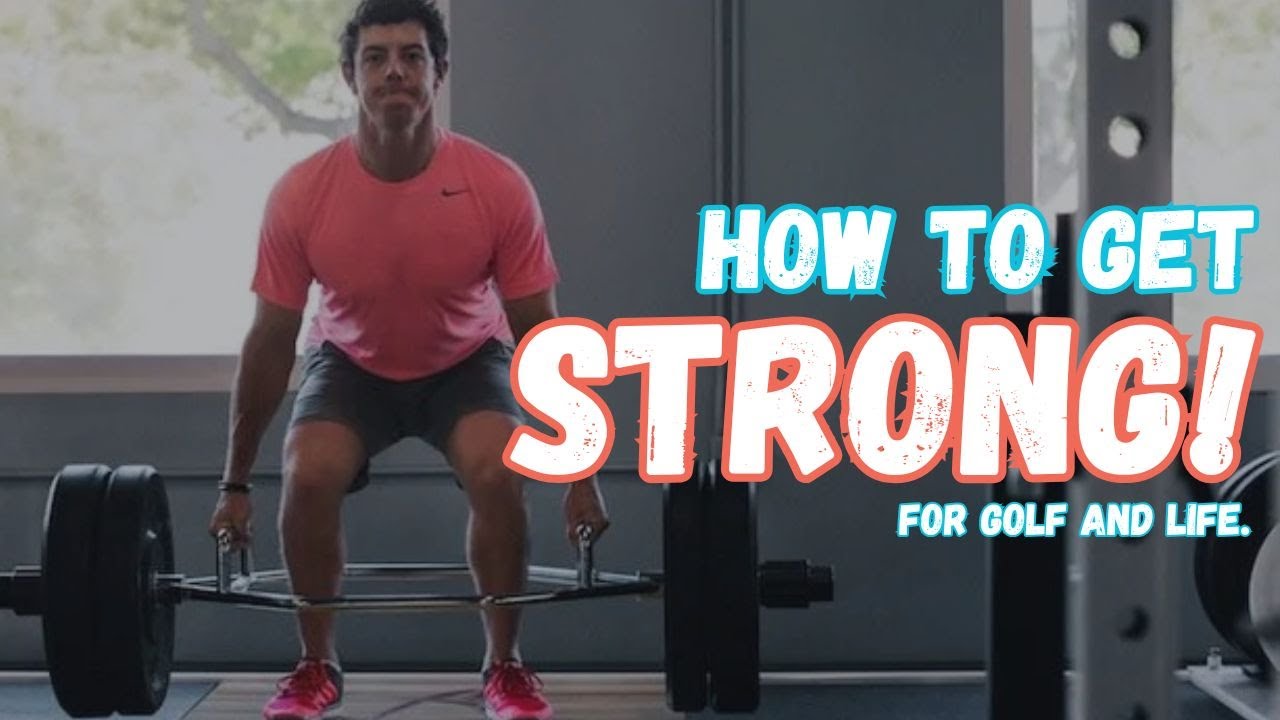
Strength Training for Golfers: What Actually Transfers to the Course
The right strength training for golfers builds power, protects against injury, and shows up in your swing. Here's what transfers — and what doesn't.
Read