
Understanding Golf Ball Measurements for Applied Progressions — Free Ebook
Most fitness coaches never look at the ball. DRVN Certified Pros do. Download this free ebook to learn how ball flight data connects to physical training protocols — and how to coach golfers at a higher level.
Most fitness coaches never get trained to read launch monitor data. Most golf coaches never connect technical ball flight patterns to physical training protocols. DRVN exists to close that gap — and this free ebook is where it starts.
Understanding Golf Ball Measurements for Applied Progressions is the first resource in the DRVN Digital Training Curriculum. It was built for fitness trainers and golf professionals equally. If you've ever wondered how to bridge the gap between what you do in the gym and what actually happens on the course, this is your starting point.
Why Ball Data Is a Coaching Superpower
Understanding why the ball does what it does is a primary element of coaching — with or without a launch monitor. When you can read ball flight and connect it to physical movement patterns, your interventions become faster, more accurate, and far more impactful to your clients.
"If we know the path of the club, we know how the player is affecting that. If we also know the club face position, we know the technicality impacting the outcome."
That's not golf theory. That's applied biomechanics. And it starts with knowing what to measure.
The 5 Ball Flight Metrics Every Coach Should Know
The ebook breaks down the five core measurements that define what a ball does in the air — and why each one matters for coaching progressions:
1. Ball Speed
The velocity of the ball immediately after impact. Ball speed is a direct output of the kinetic chain — and one of the most trainable metrics a fitness coach can influence through power development and rotational efficiency.
2. Launch Angle
The initial vertical angle of ascent relative to the ground. Too high or too low, and carry distance suffers. Launch angle reflects both swing mechanics and physical attributes like hip mobility and ground force production.
3. Carry Distance
How far the ball travels through the air before landing. Carry distance is the most measurable performance factor for technical improvement — making it the ideal benchmarking tool in a data-driven coaching process.
4. Spin
Every shot produces backspin, which creates lift and flight. Combined with side spin, total spin determines both distance and direction. Coaches who understand spin can start diagnosing movement patterns that cause offline shots — not just swing faults.
5. Dispersion
Where the ball actually ends up relative to the target. Dispersion is the real-world result of all other factors combined: start line, side spin, and final position. High dispersion = inconsistency. And inconsistency usually has a physical root cause.
Ball Flight Laws: A Diagnostic Tool for Every Coach
One of the most practical sections of the ebook is a breakdown of the 9 Ball Flight Laws — the complete matrix of possible shot shapes based on club face position relative to swing path.
From Pull Draw to Push Slice, these nine outcomes map directly to what the player's body is doing at impact. For a fitness coach, that's a diagnostic goldmine. When you know the ball flight, you can trace it backward to the physical pattern driving it — and design training that actually corrects it.
This is what separates data-informed coaching from guesswork.
Coaching Skills Built Into This Guide
Beyond the data, the ebook covers four applied coaching skills that elevate how you work with golfers:
- Consistency — How to track whether a client is repeating patterns, and how that informs your intervention strategy
- Equipment Awareness — Why understanding gear (even at a basic level) adds context to your data collection and prevents false conclusions
- Outcome Setting — How to engage clients around their goals and align your coaching vision with their performance potential
- Performance Potential — How to inspire progress by delivering an accurate, expansive picture of what's possible with the right training
These aren't soft skills. They're the difference between a good session and a coaching relationship that produces measurable, lasting results.
Who This Ebook Is For
This resource was designed for two audiences — and it delivers value to both:
- Fitness Coaches who work with golfers and want to speak the language of ball flight, connect their training protocols to on-course performance, and eventually pursue the DRVN Certified Pro™ credential
- Golf Professionals who want to deepen their data literacy, better communicate with fitness partners, and build more systematic coaching progressions around measurable outcomes
It's also the first step toward the DRVN Certified Pro™ — a credential that formally recognizes coaches who can bridge fitness and golf performance at the highest level. This ebook is part of the prerequisite curriculum.
What You'll Be Able to Do After Reading It
After working through this guide, you'll be able to answer questions like:
- What does ball flight tell me about a client's physical limitations?
- How do I use carry distance as a benchmarking tool in training?
- What's causing a client's slice — and is it a swing issue or a body issue?
- How do I use launch monitor data even if I don't own a launch monitor?
- How does backspin affect carry distance — and what physical factors drive it?
These are the questions elite golf performance coaches are already asking. This ebook gives you the foundation to answer them.
Download the Free Ebook
Understanding Golf Ball Measurements for Applied Progressions is free. No catch. Just the foundational knowledge you need to coach golfers at a higher level — whether you're a personal trainer, a strength coach, a golf instructor, or somewhere in between.
Start where the data starts: the ball.
Related Articles
Understanding Golf Club Measurements for Applied Progressions — Free Ebook
Club head speed is a body problem. Download this free ebook to learn how club data connects to physical training — and how to use swing metrics to build faster, more accurate progressions for your golfer clients.
Read
Understanding Golf Swing Biomechanics to Build a New Swing Concept — Free Ebook
How ground reaction forces, kinematic sequencing, and the coil-uncoil mechanism create a faster, more consistent golf swing — with a free ebook guide.
Read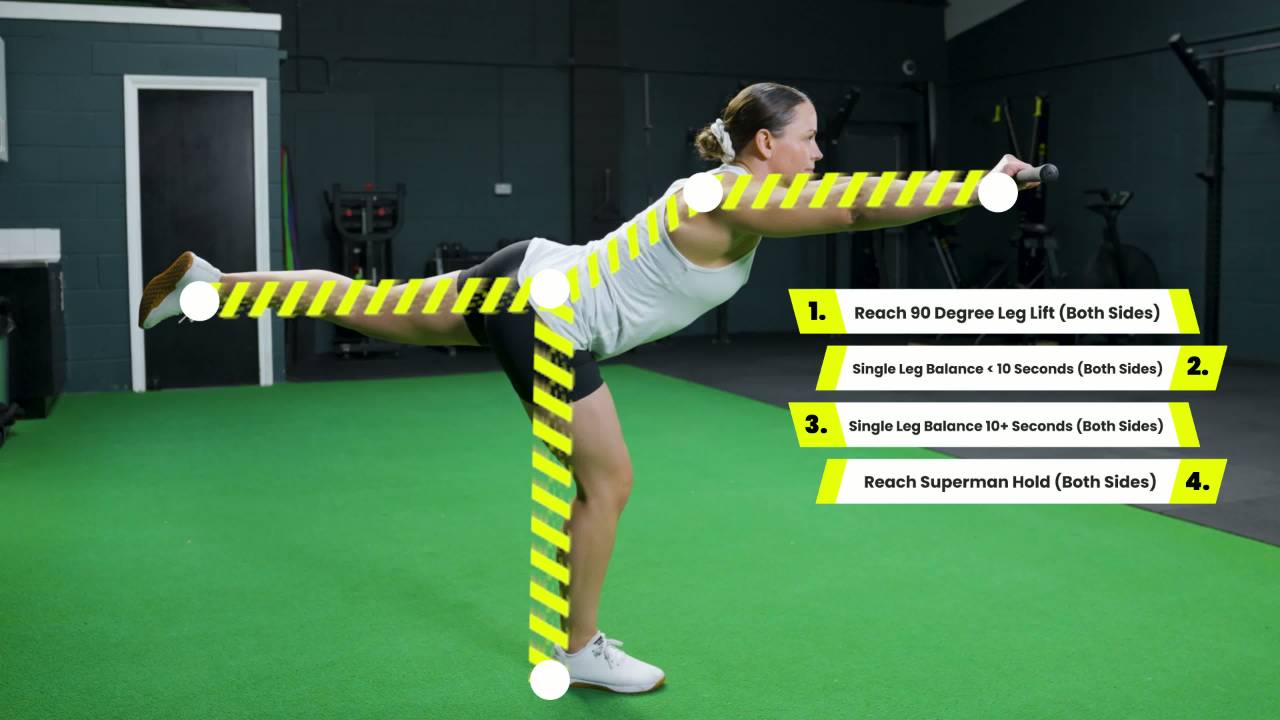
Can Your Golfer Stand on One Leg? The Single Leg Balance Test — Free Ebook
The Single Leg Balance Test reveals proprioception deficits, hip flexor dysfunction, and stability limitations that directly affect swing consistency and power. Download this free DRVN ebook to learn how to administer it, read the results, and connect them to your coaching.
Read