
Gain 15 Yards in a Single Golf Swing Workout
A focused golf swing workout that delivers real distance gains — here's the structured session that builds rotational power and speed you'll feel on the course.
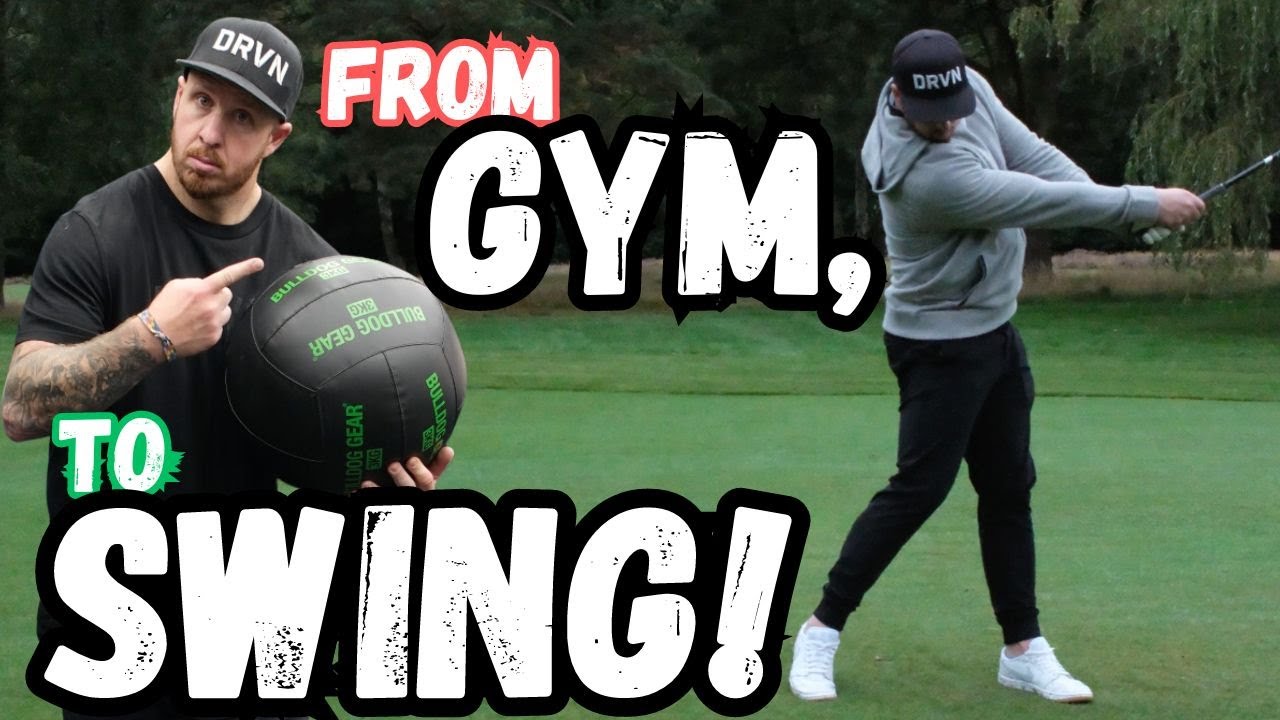
Most golfers spend years trying to add distance through technique — grip adjustments, swing thoughts, lesson after lesson. And while those things matter, there's a faster lever most golfers never pull: training the physical qualities that produce clubhead speed in the first place. A properly designed golf swing workout targets those qualities directly, and the results show up on the range the same day.
One well-designed golf swing workout, targeting the right muscles in the right sequence, can produce a measurable jump in distance. Not in six months — in a single session.
Why Distance Comes From the Body First
Clubhead speed is generated by a kinetic chain — a sequence of body segments firing in the correct order to transfer energy from the ground through the hips, torso, shoulders, arms, and finally the clubface. When any link in that chain is weak or restricted, speed leaks out. The ball goes shorter.
Fixing those leaks isn't about swing mechanics. It's about physical capacity. The muscles that drive the chain need to be strong enough to load and fire correctly — and mobile enough to move through the ranges the swing demands.
The Four Physical Drivers of Distance
Any workout designed to add yards should target these four areas:
1. Hip Separation
The ability to rotate the hips independently from the shoulders — creating X-factor stretch at the top of the backswing — is the single biggest predictor of swing speed in recreational golfers. Most amateurs lose this because their hips and shoulders turn together as a single unit.
Training hip mobility and rotational strength separately builds the separation that creates torque. More torque equals more stored energy. More stored energy equals more speed at impact.
2. Glute and Hip Strength
The downswing starts from the ground up. The first move is a shift of weight into the lead side and a push off the trail foot — driven by the glutes and hip extensors. Weak glutes mean a weak start to the downswing. The chain breaks before it even begins. (Not sure where you stand? The DRVN Glute Activation Test assesses exactly this.)
Exercises like trap bar deadlifts, hip thrusts, and lateral band walks directly build the hip strength that powers this sequence.
3. Rotational Core Power
Speed through the hitting zone is generated by the core rotating at maximum velocity. This requires both strength and fast-twitch muscle activation. A slow core produces a slow swing, regardless of how strong the arms are.
Medicine ball rotational throws — both against a wall and as overhead slams — train the core to produce explosive rotational speed. This is one of the most direct speed drills a golfer can do in the gym.
4. Shoulder and Thoracic Mobility
The upper back and shoulders need full range of motion to let the arms follow through completely. Restricted thoracic rotation forces compensations — an early release, a chicken wing, a loss of lag. The Windmill Rotation Test measures exactly how much usable rotation you have on each side. Unlocking this mobility allows the clubhead to travel on a longer arc at higher speed.
The Workout
Below is a speed-focused workout designed to address all four drivers in a single session. It can be done in 45–60 minutes and requires moderate equipment.
Warm-Up (10 min)
- Hip 90/90 mobility — 5 reps each direction
- Thoracic rotation with reach — 8 reps each side
- Glute bridge — 2 x 15
- Lateral band walk — 2 x 10 each direction
Power Block (20 min)
- Medicine ball rotational throw — 4 x 6 each side (max effort, short rest)
- Trap bar deadlift — 4 x 5 (heavy, controlled)
- Cable rotation (high-to-low) — 3 x 8 each side
Strength Block (20 min)
- Hip thrust — 3 x 10
- Pallof press — 3 x 10 each side
- Single-leg Romanian deadlift — 3 x 8 each side
Cool-Down (10 min)
- Hip flexor stretch — 60 sec each side
- Seated thoracic rotation — 10 reps each way
- Figure-four glute stretch — 60 sec each side
What to Expect
After a session like this, most golfers notice two things on the range: the ball is jumping off the face differently, and the swing feels easier at high speed. The glutes and hips are primed to fire. The thoracic spine is unlocked. The rotational chain works as designed.
Done consistently — two to three times per week over 4–6 weeks — these gains compound. What starts as a felt improvement in one session becomes a repeatable increase in measured clubhead speed over a training cycle.
Distance isn't just a swing thing. Your body has to produce it first.
Watch
Related Articles
Golf Exercises for Seniors: A Joint-Friendly Routine (With Printable PDF)
A joint-friendly routine of golf exercises and stretches for seniors — eight moves, 15 minutes, no gym required. Includes a free printable PDF to track your reps.
Read
The Off Season Is Where Your Best Golf Is Built
The summer reveals what your body can do. The off season is when you change what that is. Inside the five-phase DRVN progression — Strength, Power, Speed, Biomechanics, Skill Transfer — and what it delivers for three very different golfers.
Read
Golf Posture: The Setup Fundamentals That Unlock Rotation
Correct golf posture isn't a checklist position — it's a product of hip hinge, thoracic extension, and core control. Here's how to build a setup that lasts 18 holes.
Read